
Running a working homestead takes land, hands, and capital. Most lenders don't know what to do with a rural parcel that mixes a primary dwelling, outbuildings, livestock, and a converted cabin rented on Airbnb. The fix is simple once you know where to look: finance the property the way investors do. A DSCR loan qualifies on the property's rental income, not your personal tax returns, and stacks cleanly with USDA grants and state green-energy programs to make self-sufficient living pencil out.
Income-Based Qualification
DSCR loans underwrite on the property's projected rental income. No tax returns, no W-2, no debt-to-income ratio to fight over.
Rent the Outbuildings
A converted shed, barn cabin, or ADU rented nightly on Airbnb strengthens the DSCR ratio and lifts your approvable loan amount.
Green Energy Grants
USDA REAP and state programs cover a material share of solar, wind, and geothermal installs on qualifying rural properties.
Refinance What You Own
Already on the land? Refinance into a DSCR loan to pull cash out, fund expansion, or restructure the debt around the rental income you're already earning.
Why Traditional Lenders Balk at Homestead Properties
Homesteads don't fit the standard residential box. Conventional mortgages underwrite on comparable sales of similar homes in similar neighborhoods, and a fifteen-acre parcel with a farmhouse, barn, chicken coop, solar array, and a converted guest cabin simply has no clean comp. Agency guidelines also cap the number of outbuildings and restrict properties with significant acreage or alternative utilities.
Can you still get a conventional loan on a homestead? Sometimes, if the property reads more like a rural residence with a hobby farm than a working operation. The moment the land produces meaningful income, or the utilities go off-grid, or the outbuildings could function as separate dwellings, conventional underwriting breaks down. That's when investor financing becomes the better path.
How DSCR Loans Work for Homesteaders
A DSCR loan, short for debt service coverage ratio, measures whether the property's rental income covers the mortgage payment, taxes, insurance, and HOA fees. If the ratio clears the lender's threshold, the property qualifies. The borrower's personal income, tax returns, and W-2 history don't enter the underwriting decision.
For a homesteader, this structure fits the economics of the property. You're buying land that works: a primary dwelling plus one or more income-producing units. The appraiser and lender evaluate what those units can rent for, and that number drives the loan. Our 30-year fixed DSCR program locks the payment for three decades so your long-term plan isn't exposed to rate resets, and the No-Ratio DSCR option handles properties where the income math gets unconventional.
Qualification Snapshot
What It Takes to Qualify
650
Minimum FICO credit score
20%
Down payment (up to 80% LTV)
0.75x
DSCR ratio floor on qualifying programs
$0
Tax returns or W-2 required
Pricing tiers improve at 680, 720, and 740+. No-Ratio DSCR available for properties that don't hit the 0.75x floor, with stronger down payment and reserve requirements.
Using Rental Income to Qualify: Sheds, Cabins, and ADUs
A shed converted into a finished cabin, listed on Airbnb at $150 a night with a 60% occupancy rate, produces roughly $2,700 per month before fees. Add a second tiny house or RV hookup site and you're stacking $4,000 to $5,000 of monthly revenue on a single parcel. That income is what the DSCR loan qualifies against.
More rental doors on one parcel means a stronger coverage ratio, which can mean a larger loan, a better rate, or both. Investors who understand this treat the homestead as a small mixed-use portfolio: the primary dwelling is for them, the outbuildings pay the mortgage, and the land is the reason they're there. The same logic applies to a detached ADU, a converted barn, a studio above the garage, or a cluster of glamping units with permits.
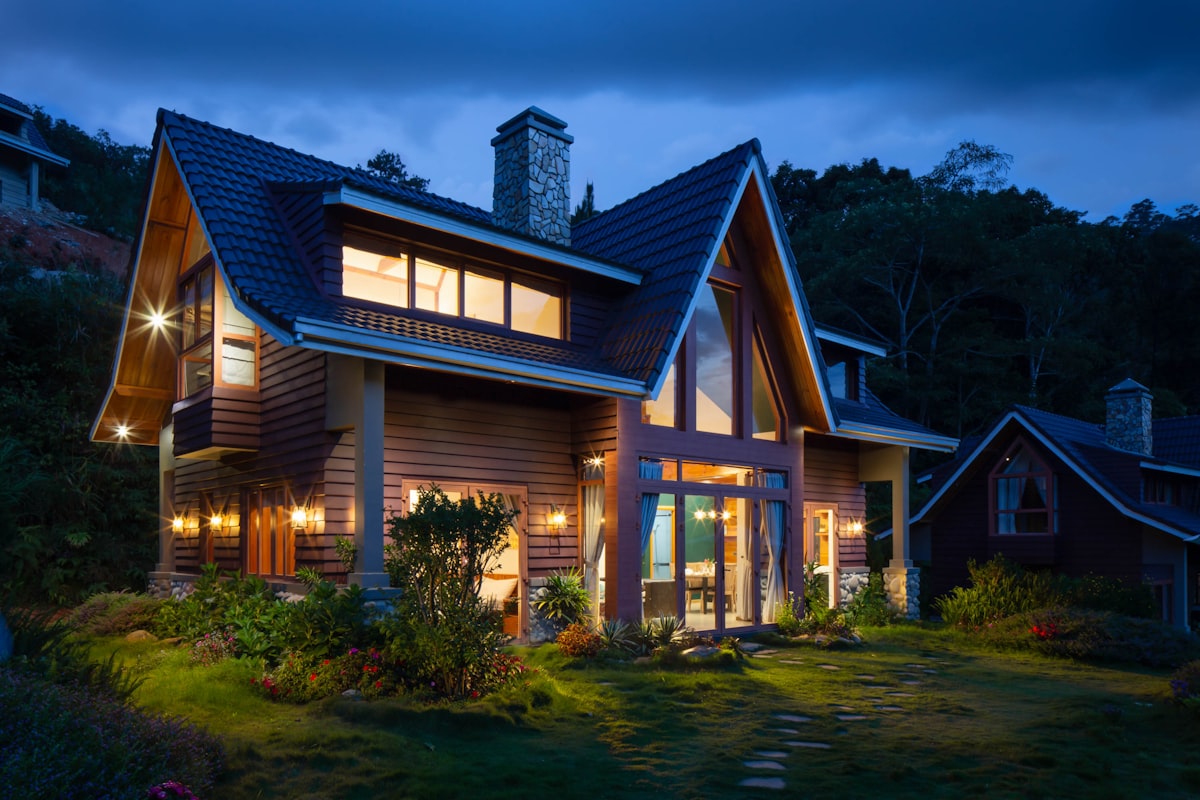
Every rentable outbuilding on the parcel strengthens the debt coverage ratio and improves your financing terms.
Hiring Live-On Help: Pay and Housing, Structured Right
Most working homesteads need labor the owner can't supply alone. Skilled, physically capable hands don't come cheap, and many of them want affordable rural housing they can't easily find on the open market. There's a legitimate way to line those two needs up so everybody benefits, and it strengthens your DSCR file at the same time. Done wrong, it's mortgage fraud and a labor-law mess. Done right, it's a real rental that a lender will underwrite.
Two Separate Transactions, Two Real Paper Trails
The legal structure is straightforward: the worker is an employee or a 1099 contractor who gets paid full wages for their labor, and the worker is also a tenant who pays fair-market rent under a written lease for the cabin, ADU, or bunkhouse they live in. Two transactions. Two paper trails. The paycheck hits their bank account. Rent leaves their bank account and lands in yours. Both sides of the ledger are verifiable on bank statements, a 1099 or W-2, a Schedule E, and a standard residential lease.
That is the version a DSCR lender can underwrite. The rent you collect from the worker-tenant shows up as documented rental income on the property, which counts toward the debt service coverage ratio the same way rent from any other tenant would. It's not a workaround or a loophole. It's the same arms-length rental arrangement you'd have with a stranger off Craigslist, just with someone who also happens to work on the farm.
What Does Not Work
What you cannot do is pay the worker a reduced wage with "rent" silently deducted as a bookkeeping entry, then report the full gross to a lender as rental income. That is a misrepresentation on a loan application and it is exactly the kind of structuring that draws federal scrutiny under 18 U.S.C. §1014. Lenders verify rent through bank deposits, leases, and sometimes tax returns. An offset that never moved through a bank will not survive underwriting, and if it does, it will not survive an audit.
A few other traps to avoid. Most states require written authorization before any wage deduction for housing, and many cap the deduction or require the post-deduction wage to stay above minimum wage. Tying housing to continued employment can trigger agricultural labor housing rules (DOL, OSHA, state ag department). Once a worker has occupied the dwelling long enough, landlord-tenant law treats them as a tenant with eviction protections even if you fire them. Structure the two relationships as separate and documented from day one so termination of employment doesn't leave you with a non-paying occupant you can't remove.
The DSCR Angle
When the lease is real and the rent is real, that income counts. A homestead with a primary dwelling plus a worker cabin rented at $1,200 per month produces $14,400 in documented annual rent. Add a second unit, short-term rental nights on a weekend cabin, or pasture lease income, and you're stacking qualifying revenue on a property a conventional lender wouldn't touch. Our No-Ratio DSCR program is often the right fit when the income is mixed or unconventional. Bring a CPA and an employment attorney in before you set the arrangement up; the paper you create on day one determines whether the income is financeable on day ninety.
Grants and Cost-Share Programs for Homesteads and Small Farms
Grant money won't buy the land for you, but it can defray the cost of the systems that make a homestead self-sufficient. These programs stack with private financing, so a DSCR loan on the property plus grant-funded infrastructure is a legitimate strategy for the right parcel.
USDA Rural Energy for America Program (REAP)
REAP provides grants and guaranteed loans to agricultural producers and small rural businesses for renewable energy systems and energy efficiency improvements. Eligible projects include solar arrays, wind turbines, geothermal systems, biomass, and anaerobic digesters. Grants can cover a significant share of total project cost, with guaranteed loans available on top of that.
To qualify as an agricultural producer, you generally need to earn at least half of your gross income from agricultural operations. A homestead that sells eggs, produce, cut flowers, honey, or livestock at farmers' markets or through a CSA can meet that threshold even at modest scale. Check with your state USDA Rural Development office for current funding cycles and application windows.
USDA NRCS Conservation Programs
The Natural Resources Conservation Service runs cost-share programs like EQIP (Environmental Quality Incentives Program) that pay a portion of conservation practices: fencing, water systems, cover cropping, soil health improvements, high-tunnel greenhouses, and pollinator habitat. Payment rates vary by state and practice.
USDA FSA Farm Loan Programs
Farm Service Agency loan programs fund beginning farmers and ranchers who can't access commercial credit, with reduced down payments and subsidized rates. These aren't grants, but they're structured for people buying working land and can sit alongside an investor loan on the rental portions of the property.
Ready to Finance Your Homestead?
If the property cash flows, we can fund it. DSCR loans qualify on rental income from cabins, ADUs, and outbuildings, no tax returns required.
Already Own the Land? Refinance Into a DSCR Loan
Homesteaders who bought years ago on a conventional mortgage often end up land-rich and cash-poor, with equity locked up and a lender who won't allow short-term rentals in the dwelling or the outbuildings. A cash-out refinance into a DSCR loan solves both problems. The new loan is underwritten on the rental income, the terms permit nightly or monthly rentals of the qualifying units, and the cash pulled out funds the next stage of the buildout.
Use cases we see constantly: converting a barn into a short-term rental, installing solar to cut operating costs, drilling a new well, adding a second cabin, fencing for rotational grazing, or buying an adjacent parcel. The refinance unlocks capital that was already sitting in the dirt.
What to Look for in a Homestead-Ready Property
If you're shopping for the right piece of land, think like an investor before you think like a homesteader. The property needs to pencil out on rental income, which means it needs real income potential from day one or with a clear, financeable path to it.
Can you buy raw land and finance it? DSCR loans need existing structures with rental potential, so raw land generally doesn't qualify. What does qualify: a property with an existing primary dwelling plus a guest cabin, an ADU, a convertible barn, a permitted RV pad, or a second house. If you can show the appraiser and the lender at least one income-producing unit, you have a financeable deal.
Zoning matters as much as the structures. Confirm short-term rentals are permitted in the jurisdiction, check acreage minimums for agricultural operations, and verify any conservation easements or restrictive covenants before making an offer. A property that can't legally rent its cabin is worth a lot less to an investor-minded buyer.
Homestead Financing Checklist
- Identify at least one income-producing unit on the parcel: cabin, ADU, convertible barn, or permitted RV/glamping site
- Confirm local zoning permits short-term rentals and check acreage rules for agricultural classification
- Run revenue projections for each rentable unit using AirDNA or comparable platform data
- Apply for a DSCR loan on the purchase or a cash-out refinance on an existing homestead
- Layer in USDA REAP, NRCS EQIP, and state cost-share grants for energy and conservation infrastructure
- Secure short-term rental insurance on any unit rented nightly; standard landlord policies usually exclude transient use
- If you hire live-on help, structure wages and rent as two separate transactions with real paper trails on both sides
Fund the Homestead That Pays for Itself
Whether you're buying the land or refinancing what you already own, we structure DSCR loans around the rental income the property produces. Call for a straightforward proposal on your parcel.
Homesteading is a long game, and the financing should match. DSCR loans on the rental side, cost-share grants on the infrastructure side, and a property chosen with income potential in mind add up to a working operation that funds its own existence. The land carries the mortgage, the grants subsidize the build, and you get to live on the parcel you're building.