

An Investor's Guide to Financing Rental Property

Rental property financing is the foundation of every successful real estate investment. The loan you choose determines your monthly cash flow, your ability to scale, and your long-term return on equity. Understanding the full range of financing options puts you in a stronger position to close quickly and maximize profitability.
Down Payment Strategy
Investment properties typically require 20-25% down -- a larger deposit means better rates and cash flow.
Credit Optimization
Moving your score from 720 to 760 could save close to $10,000 in total interest over 30 years.
Specialty Lenders
Investment-focused lenders offer products, terms, and closing speeds that big banks cannot match.
Cash-Out Refinancing
Extract equity from existing properties to fund down payments on additional rental acquisitions.
Rental property financing is the foundation of every successful real estate investment. The loan you choose determines your monthly cash flow, your ability to scale, and your long-term return on equity. Whether you are purchasing your first rental or adding to an established portfolio, understanding the full range of financing options puts you in a stronger position to negotiate, close quickly, and maximize profitability.
A well-financed rental property can produce immediate cash flow from tenant rent, build long-term equity through appreciation, and provide tax advantages that compound over time. A poorly structured loan can erode all of those benefits before your first tenant moves in.
5 Ways to Finance a Rental Property
The best financing approach depends on where you are in your investment journey, your credit profile, and how many properties you already own. Most experienced investors use a combination of these strategies.
1. Save for a Sizable Down Payment
Investment property loans typically require larger down payments than primary residence mortgages, usually 20 to 25 percent. While this takes discipline, a larger down payment reduces your monthly mortgage payment, improves your debt service coverage ratio, and may qualify you for better interest rates. For first-time rental property buyers, building a strong down payment is the single most important step toward approval.
The patience pays off once your tenant is in place. Their rent covers the mortgage, and the property begins building equity for you from month one.
2. Optimize Your Credit Score Before Applying
Every lender evaluates your credit history, and even small score improvements can translate to significant savings. Moving your credit score from 720 to 760 could reduce your interest rate by 0.2 percent or more. On a 30-year mortgage, that difference can save close to $10,000 in total interest. Pull your credit report, address any errors, pay down revolving balances, and avoid opening new credit lines in the months before applying for rental property financing.
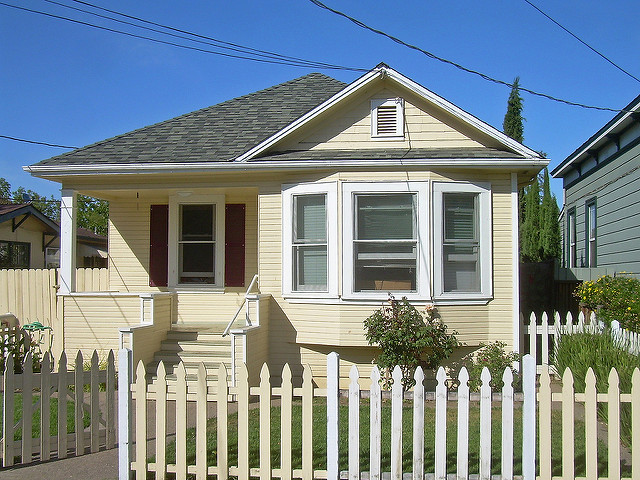
A well-financed rental property produces immediate cash flow, builds equity, and provides tax advantages
3. Look Beyond the Big Banks
National banks focus primarily on owner-occupied residential mortgages. Their products, underwriting criteria, and service models are built for homebuyers, not investors. Investment property borrowers often find better rates, more flexible terms, and faster closings through specialty lenders, community banks, and online lending platforms that cater specifically to real estate investors. What are your options beyond traditional bank financing? Specialty lenders like Rental Home Financing build their entire business around investor needs, offering products that conventional banks simply do not carry.
Financing Built for Rental Property Investors
We offer DSCR loans, blanket mortgages, and portfolio financing designed specifically for landlords. Qualify based on rental income rather than personal tax returns.
4. Negotiate Owner Financing
Seller financing is exactly what it sounds like: the property seller lends you the money to purchase their home, secured by a promissory note with terms similar to a traditional mortgage. This arrangement can be advantageous for both parties. You may secure a lower interest rate than a bank would offer, and the seller earns the sale price plus accrued interest over time. Owner financing is especially useful when traditional lending options are limited, or when you want to close quickly without the delays of institutional underwriting.
Even if a seller is not willing to finance the entire purchase, they may agree to carry a second lien covering a portion of the down payment, reducing the cash you need to bring to closing.
5. Use a Cash-Out Refinance
If you already own property with accumulated equity, a cash-out refinance replaces your current mortgage with a new, larger loan and gives you the difference in cash. Many investors use this capital to make down payments on additional rental properties. Unlike using the funds for renovations or debt consolidation, deploying cash-out proceeds into income-producing real estate creates a new revenue stream that helps cover the increased mortgage payment on the refinanced property.
A residential rental property loan structured as a cash-out refinance allows you to unlock trapped equity and redeploy it into properties that generate monthly income.
How Do You Finance Rental Properties When You Already Own Multiple Homes?
Portfolio investors face a unique challenge. Traditional lenders cap the number of financed properties at four or ten, depending on the program. Even investors with perfect payment histories and substantial collateral hit walls with conventional banks because high-volume investor lending falls outside their standard business model.
This is where specialized investor lending fills the gap. A blanket mortgage consolidates multiple properties under a single loan, reducing paperwork and often improving overall terms. DSCR (Debt Service Coverage Ratio) loans qualify you based on the rental income your properties generate rather than your personal income, making them ideal for self-employed investors or those with complex tax situations.
- Single property loans: Ideal for investors adding one property at a time with competitive fixed rates
- Blanket mortgages: Consolidate 5 or more properties under one loan for simplified management
- DSCR loans: Qualify based on property cash flow, no W-2 or tax return required
- Cash-out refinancing: Extract equity from existing properties to fund new acquisitions
- 30-year fixed programs: Lock in predictable payments with a long-term fixed rate
Rental Property Financing Checklist
- Save 20-25% down payment for best investment property loan rates
- Pull your credit report and address errors before applying
- Compare specialty investor lenders alongside traditional banks
- Evaluate DSCR loans to qualify based on property income rather than W-2s
- Consider blanket mortgages to consolidate multiple properties under one loan
Ready to Finance Your Next Rental Property?
Start the application process now and we will let you know if you qualify, so you can move forward with confidence on your next acquisition.