
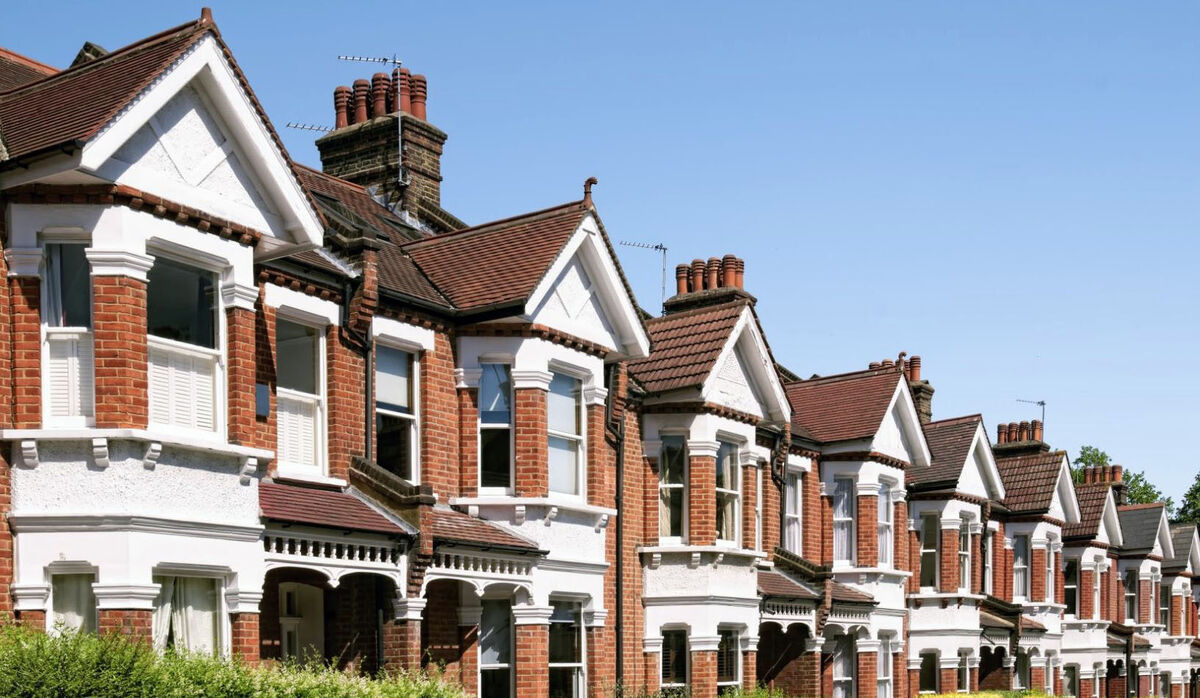

Every rental property looks great in a listing. The photos are staged, the rent estimate is optimistic, and the seller swears it's a cash cow. Your job is to prove it with math. This guide breaks down the four metrics that separate profitable deals from money pits — Net Operating Income, cap rate, cash-on-cash return, and DSCR. We'll run real numbers on a $250,000 duplex so you can see exactly how each formula works before you write an offer.
Net Operating Income (NOI)
Gross rental income minus all operating expenses. This is the property's actual earning power before your mortgage payment comes out. It's the foundation of every other metric.
Cap Rate
NOI divided by purchase price. Tells you what return the property generates as if you paid all cash. Useful for comparing deals across different price points and markets.
Cash-on-Cash Return
Annual cash flow divided by your total cash invested. This is the number that tells you how hard your actual dollars are working — factoring in your mortgage, down payment, and closing costs.
DSCR Ratio
Monthly gross rent divided by monthly PITIA. Lenders use this to determine if the property earns enough to cover the mortgage. A 1.25x DSCR means the property earns 25% more than the payment requires.
Why Cash Flow Analysis Matters Before You Buy
A property that looks profitable on a napkin can bleed money once you account for vacancy, maintenance, property management, and insurance. The difference between a good deal and a bad one usually isn't the purchase price — it's the expenses nobody told you about.
Cash flow analysis forces you to stress-test the deal with real numbers. You'll know your monthly cash flow, your annual return on investment, and whether the property can qualify for financing — all before you make an offer.
Here's the reality: roughly half of new rental investors underestimate operating expenses by 20-30%. They look at rent minus mortgage and think that's profit. It isn't. Taxes, insurance, vacancy, repairs, and management fees eat into that number fast.
The four metrics in this guide — NOI, cap rate, cash-on-cash return, and DSCR — give you a complete picture. Run all four on every deal and you'll spot the losers before they cost you money.
How to Calculate Net Operating Income (NOI)
NOI is simple: take everything the property earns, subtract everything it costs to operate (excluding the mortgage). Here's the formula:
NOI = Gross Rental Income − Operating Expenses
Operating expenses include property taxes, insurance, maintenance, vacancy allowance, property management, HOA fees, and utilities you pay. They do not include your mortgage payment, depreciation, or income taxes.
Let's run this on a real deal. Say you're looking at a $250,000 duplex. Each unit rents for $1,250/month.
Gross annual rent: $1,250 x 2 units x 12 months = $30,000
Now subtract operating expenses:
NOI = $30,000 − $13,400 = $16,600/year
That $16,600 is what the property actually produces before your mortgage. If someone quotes you "cash flow" without subtracting these expenses, they're giving you a fantasy number.
What Is Cap Rate and How Do You Calculate It?
Cap rate tells you the property's return as if you bought it with cash — no mortgage involved. It's the quickest way to compare two deals at different price points.
Cap Rate = NOI ÷ Purchase Price
Using our duplex: $16,600 / $250,000 = 6.64%
That's a solid cap rate for a residential duplex. Generally, 5-8% is reasonable for single-family and small multifamily. Apartment buildings in strong markets might trade at 4-6%, while properties in secondary markets can hit 8-10%.
A higher cap rate means more income relative to the price — but it often signals higher risk, worse location, or deferred maintenance. A 12% cap rate property in a declining neighborhood might underperform a 5% cap rate property in a growing market once you factor in appreciation, vacancy rates, and tenant quality.
Cap rate is best used for side-by-side deal comparison, not as a standalone buy/don't-buy number.
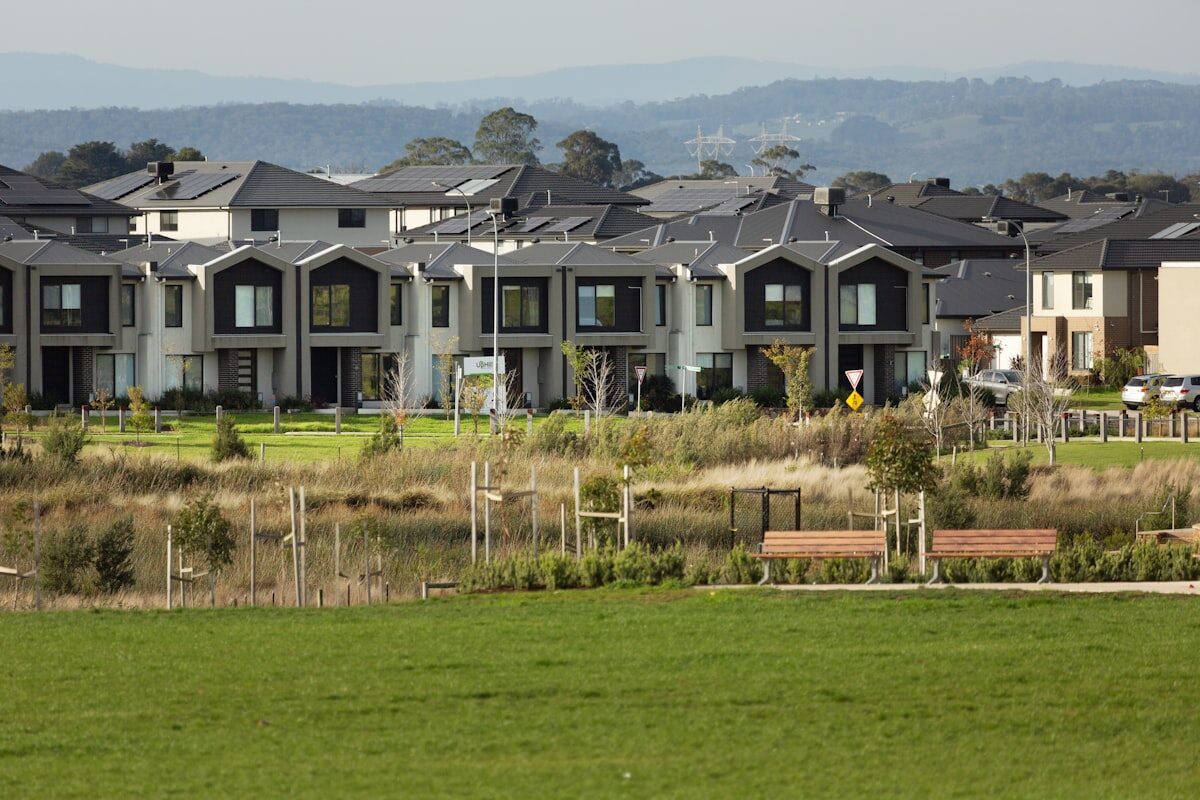
A duplex like this one is the basis of our worked example — two units, one mortgage, one analysis.
Cash-on-Cash Return: The Number That Actually Matters
Cap rate ignores financing. Cash-on-cash return doesn't. It measures how much cash you're earning relative to the actual cash you put in — your down payment, closing costs, and any rehab.
Cash-on-Cash Return = Annual Cash Flow ÷ Total Cash Invested
Annual cash flow = NOI minus annual mortgage payments. Let's keep going with our duplex.
You put 25% down on $250,000 = $62,500 down payment. Closing costs run about $5,000. Total cash invested: $67,500.
Your mortgage: $187,500 at 7.5% on a 30-year fixed DSCR loan. Monthly payment (principal + interest): approximately $1,311. Annual debt service: $15,732.
Annual Cash Flow = $16,600 (NOI) − $15,732 (debt service) = $868
Cash-on-Cash Return = $868 ÷ $67,500 = 1.29%
That's thin. And it tells you something the cap rate (6.64%) didn't — at 7.5% interest with 25% down, this duplex barely cash flows. You'd need higher rents, a lower purchase price, or a lower interest rate to make this deal strong.
An 8-12% cash-on-cash return is generally where experienced investors want to be. Below 5%, you're mostly banking on appreciation rather than income.
Get Financing for Your Next Deal
Once you've found a property that pencils out, we can fund it. DSCR loans from $50K to $3M with no tax returns required. Close in 21-30 days.
How Does DSCR Factor Into Your Deal Analysis?
DSCR stands for Debt Service Coverage Ratio. It's your monthly gross rent divided by your monthly PITIA (principal, interest, taxes, insurance, HOA, and property management fees). Lenders use it to decide whether the property earns enough to qualify for financing without looking at your personal income.
DSCR = Monthly Gross Rent ÷ Monthly PITIA
Back to our duplex: $16,600 / $15,732 = 1.055x
That's a 1.055x DSCR. The property earns about 5.5% more than the mortgage costs. Most lenders want at least .75x to 1.25x, so this deal would qualify under many DSCR loan programs — though the tight ratio might mean a slightly higher rate.
If the DSCR comes in below .75x, the property doesn't cover its own mortgage from rental income. That doesn't automatically kill the deal. No-Ratio DSCR programs exist for properties that fall below .75x, though you'll typically need more down payment or a lower LTV (70-75%).
DSCR is the metric your lender cares about most. Run it before you run to the bank.
Putting It All Together: A Complete Deal Analysis
Let's recap our $250,000 duplex with all four metrics side by side:
The cap rate says this is a decent property. The cash-on-cash return says it's a mediocre investment at current interest rates and 25% down. These two numbers telling different stories is normal — that's why you run both.
What would fix this deal? A few scenarios:
Negotiate to $225,000
NOI stays at $16,600, cap rate jumps to 7.38%, cash-on-cash improves with a smaller mortgage.
Raise rents $100/unit
Adds $2,400/year to NOI, pushing cash-on-cash above 4%.
Lower down payment to 20%
Frees up capital but increases debt service. Works if DSCR is strong enough.
Add ancillary income
Coin laundry, storage, or parking fees can add $1,200-$2,400/year to NOI.
The point isn't to chase one magic number. It's to see how all four metrics interact — and where you have room to improve the deal.
Common Mistakes in Rental Property Cash Flow Analysis
Using the listing agent's rent estimate
Agents quote top-of-market rents. Pull actual comps from rental listings in the same zip code. Better yet, call a local property manager and ask what the units would realistically rent for.
Ignoring vacancy
No property stays 100% occupied forever. Budget 5-8% for long-term rentals, 15-25% for short-term/Airbnb. Higher tenant turnover = higher vacancy budget.
Skipping property management fees
Even if you self-manage, include 8-10% for management. You need to know what the deal looks like without your free labor propping up the returns.
Forgetting capital expenditures
A new roof costs $8K-$15K. HVAC replacement runs $5K-$10K. Budget 5-10% of gross rent for capital reserves, or you'll write checks out of pocket.
Using gross rent as "income"
The most common mistake. Gross rent is not income. Income is what's left after operating expenses. Always start with NOI.

The deal that "feels right" still needs to pass the spreadsheet test.
What Expenses Do Most New Investors Forget?
The short answer: almost all of them. Here's what catches people off guard.
Vacancy loss
The biggest blind spot. A one-month vacancy on a $1,500/month rental costs $1,500 in lost rent plus $500-$1,000 in turnover costs (cleaning, paint, advertising). Budget for it.
Maintenance and repairs
Run 8-12% of gross rent on older properties, 5-8% on newer ones. Covers everything from leaky faucets to water heater replacements.
Capital expenditure reserves (CapEx)
Separate from maintenance. Set aside $100-$200/month per unit for big-ticket replacements: roof, HVAC, flooring, appliances.
Lawn care, snow removal, pest control
Adds up fast on single-family properties. Expect $100-$300/month depending on market and property size.
Landlord insurance
Costs 15-25% more than a standard homeowner's policy. Don't estimate — get an actual quote before you close.
Quick-Reference: Expense Percentages to Budget
Vacancy Allowance
5-8% of gross rent for long-term rentals. 15-25% for short-term/Airbnb. One month vacant on a $1,500/month unit costs $2,000-$2,500 with turnover.
Maintenance & Repairs
8-12% of gross rent for older properties, 5-8% for newer builds. Covers everything from leaky faucets to water heater replacements.
CapEx Reserves
$100-$200/month per unit for big-ticket replacements: roof ($8K-$15K), HVAC ($5K-$10K), flooring, appliances. Separate from day-to-day maintenance.
Property Management
8-10% of gross rent. Budget this even if you self-manage — you need to know what the deal looks like without your free labor propping up the returns.
If you're new to rental investing, our guide to financing your first rental property walks through the full acquisition process from pre-approval to closing.
Deal Analysis Checklist
- Calculate gross annual rent using verified market comps (not listing estimates)
- Subtract all operating expenses: taxes, insurance, vacancy, maintenance, management, CapEx
- Calculate NOI — this is your true property income before debt service
- Run cap rate (NOI / price) to compare against similar deals in the market
- Calculate annual debt service based on actual loan terms (rate, term, LTV)
- Run DSCR (monthly gross rent / monthly PITIA) to confirm the deal qualifies for financing
- Calculate cash-on-cash return (cash flow / total cash invested) — aim for 8%+
- Stress-test with higher vacancy (10%), higher rates (+1%), and lower rents (-5%)
Run every deal through this checklist before you write an offer. The numbers don't lie — and they'll protect you from the deals that look great on paper but fall apart in practice.
If the numbers work and you're ready to move, DSCR loans let you close based on the property's income rather than your personal tax returns. That's the fastest path from "the deal pencils" to "I own it."
Ready to Finance Your Next Investment?
You've done the analysis. The deal works. Now get funded. DSCR loans with no income docs, 30-year fixed terms, and closings in as fast as 21 days.